ForestCo Insights Home

Category

Market Intelligence

15 articles

Seven Competencies That Define High-Performing Timber Enterprise Leaders — And How to Develop Them

Seven Competencies That Define High-Performing Timber Enterprise Leaders — And How to Develop Them

The most financially successful operators in the US timber and forestry industry share a distinct set of professional competencies that go well beyond technical forestry knowledge. Understanding these skills — and deliberately cultivating them — can meaningfully separate high-growth enterprises from those that stagnate. This article examines seven of the most impactful capabilities and provides a practical framework for developing each one.

Locked In and Left Behind: The Hidden Cost of Forward Contracting in Volatile Timber Markets

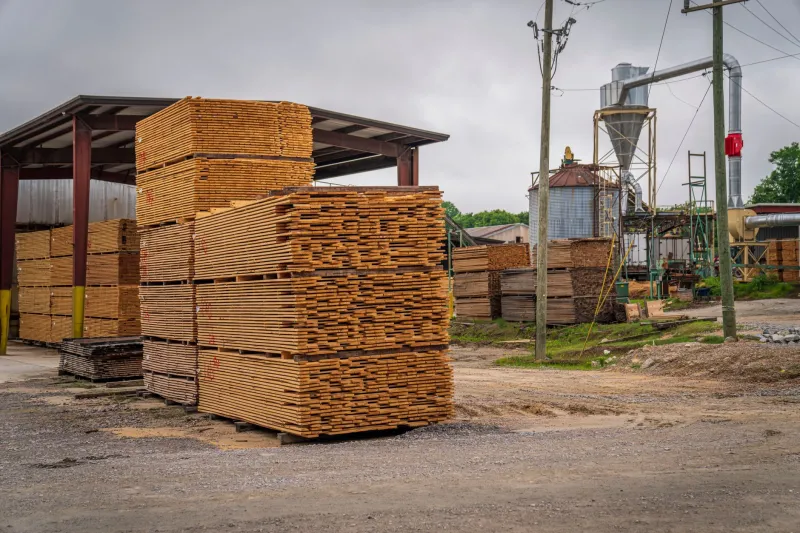
Locked In and Left Behind: The Hidden Cost of Forward Contracting in Volatile Timber Markets

Forward contracts offer timber enterprises a familiar sense of price certainty, but that certainty carries a cost that rarely appears on the balance sheet. When spot market conditions surge—as they did dramatically in 2021 and again in 2023—operators locked into below-market forward agreements can forfeit millions in recoverable margin. This article examines the structural tension between hedging discipline and value maximization, and offers a decision framework for enterprise operators navigati

Why Conventional Lenders Keep Getting Timber Wrong — And What Forest Enterprises Can Do About It

Why Conventional Lenders Keep Getting Timber Wrong — And What Forest Enterprises Can Do About It

Traditional bank underwriting models were built for annual crop cycles and industrial manufacturing — not the 40-year biological timelines that define timber enterprise finance. As a result, forestry operators across the US are systematically underserved by mainstream lenders, often accepting unfavorable terms simply because they lack the language to reframe the conversation. Understanding the structural mismatch — and how to correct it — may be one of the most consequential financial decisions

Wood Waste or Working Capital? How Timber Enterprises Are Rethinking Biomass as a Revenue Engine

Wood Waste or Working Capital? How Timber Enterprises Are Rethinking Biomass as a Revenue Engine

Across the US timber sector, mill residuals and logging slash are still treated as disposal liabilities rather than monetizable assets. A growing cohort of forward-thinking operators is proving that biomass-to-energy markets and renewable energy credit structures can convert those costs into six- and seven-figure annual revenue streams. Here is what CFOs and operations directors need to understand before the arbitrage window narrows.

Counting Carbon Wrong: Why Timber Operators Are Systematically Undervaluing Their Biomass Assets

Counting Carbon Wrong: Why Timber Operators Are Systematically Undervaluing Their Biomass Assets

Across US timber operations, biomass valuation remains an afterthought to primary lumber revenue—yet the financial consequences of that oversight are growing. Outdated measurement protocols and fragmented supply chain data are leaving significant voluntary carbon market revenue uncaptured. This analysis provides a structured framework for enterprise operators to audit their biomass accounting and close the gap.

Who Controls the Price? How Stumpage Market Opacity Is Shifting Timber Revenue Away From Landowners

Who Controls the Price? How Stumpage Market Opacity Is Shifting Timber Revenue Away From Landowners

Stumpage pricing in the United States remains one of the most fragmented and opaque data environments in any commodity market, and that fragmentation has a cost — one that is disproportionately borne by timber owners rather than intermediaries. Enterprise operators who rely on regional brokers as their primary pricing reference are, in many cases, operating at a structural disadvantage. Understanding where to find independent benchmarks and how to audit broker valuations is no longer optional —

Mill Floor Millions: Why US Timber Producers Are Leaving Residue Revenue Behind

Mill Floor Millions: Why US Timber Producers Are Leaving Residue Revenue Behind

Across the US timber industry, mid-to-large mills generate substantial volumes of sawdust, bark, and low-grade wood fiber every operating day—yet most of that material exits the gate at minimal value or no value at all. Emerging buyer categories in pellet manufacturing, biochemical processing, and distributed energy are actively competing for these residue streams. The question is whether mill operators have the market intelligence and internal alignment to meet them.

Dark Data, Diminished Returns: How Forest Inventory Blind Spots Are Quietly Draining Timber Enterprise Value

Dark Data, Diminished Returns: How Forest Inventory Blind Spots Are Quietly Draining Timber Enterprise Value

Most large-scale timber operators are generating more forest inventory data than at any point in their history—yet the analytical infrastructure to convert that data into competitive advantage remains conspicuously absent. The gap between what enterprise forestry science can reveal and what legacy inventory systems actually surface is widening, and the financial consequences are no longer marginal. Forward-looking operators are beginning to understand that unexamined data is not neutral: it carr

When Institutional Capital Meets Timberland: The Valuation Frameworks That Legacy Appraisals Can't See

When Institutional Capital Meets Timberland: The Valuation Frameworks That Legacy Appraisals Can't See

A growing wave of institutional investment in US timberland is exposing a fundamental mismatch between conventional appraisal methods and the metrics sophisticated capital allocators demand. Biodiversity credits, water quality premiums, and climate resilience scoring are reshaping how timberland deals are structured—yet most enterprise operators remain anchored to metrics that leave significant value on the table.

Beyond Board Feet: The Hidden Value Drivers That Modern Timber Appraisals Are Finally Starting to Count

Beyond Board Feet: The Hidden Value Drivers That Modern Timber Appraisals Are Finally Starting to Count

Conventional timber valuation frameworks were built for a simpler era—one in which standing wood, soil productivity, and comparable sales told the whole story. Today, a growing constellation of revenue streams and ecosystem services are reshaping what forest assets are actually worth, and enterprises that cling to legacy methodologies risk leaving substantial capital on the table. This analysis examines the most consequential valuation gaps and offers a structured framework for stress-testing yo

Deductions in the Dark: How Large-Scale Timber Operators Are Overpaying the IRS

Deductions in the Dark: How Large-Scale Timber Operators Are Overpaying the IRS

Enterprise forestry operations face one of the most intricate tax environments in American business, yet many mid-to-large operators consistently leave substantial deductions unclaimed. From cost segregation opportunities on processing infrastructure to the structural advantages of timber REIT qualification, the gap between what companies pay and what they owe is often wider than leadership realizes. This analysis examines the key areas where timber enterprises can reclaim lost value without com

Forest Acquisitions That Disappoint: Closing the Due Diligence Blind Spots Before the Deal Closes

Forest Acquisitions That Disappoint: Closing the Due Diligence Blind Spots Before the Deal Closes

Timberland acquisitions have attracted sustained institutional interest, yet post-close performance frequently falls short of underwriting projections — not because of market miscalculation, but because of due diligence gaps that experienced buyers repeatedly underestimate. Soil composition variability, unresolved wildlife habitat obligations, and dormant water rights claims represent categories of latent liability that standard forestry appraisals rarely surface with adequate depth. Enterprise

Reforestation Returns: Closing the Accounting Gap That Costs Timber Enterprises Millions

Reforestation Returns: Closing the Accounting Gap That Costs Timber Enterprises Millions

Most US timber enterprises treat post-harvest replanting as a cost center rather than a revenue-generating asset — and the financial consequences are substantial. New benchmarking data reveals that industry leaders are capturing significantly higher long-term portfolio value by rethinking how reforestation is measured, reported, and monetized. This analysis examines the frameworks separating high-performing regeneration programs from those leaving capital on the table.

From Acres to Assets: Unlocking Carbon Revenue in Your Timber Portfolio

From Acres to Assets: Unlocking Carbon Revenue in Your Timber Portfolio

The voluntary carbon market has matured into a credible revenue channel for US timber enterprises willing to quantify and certify what their forests already do. Understanding sequestration methodologies, certification pathways, and ESG pricing dynamics can transform sustainable forest management from a cost center into a direct profit driver.